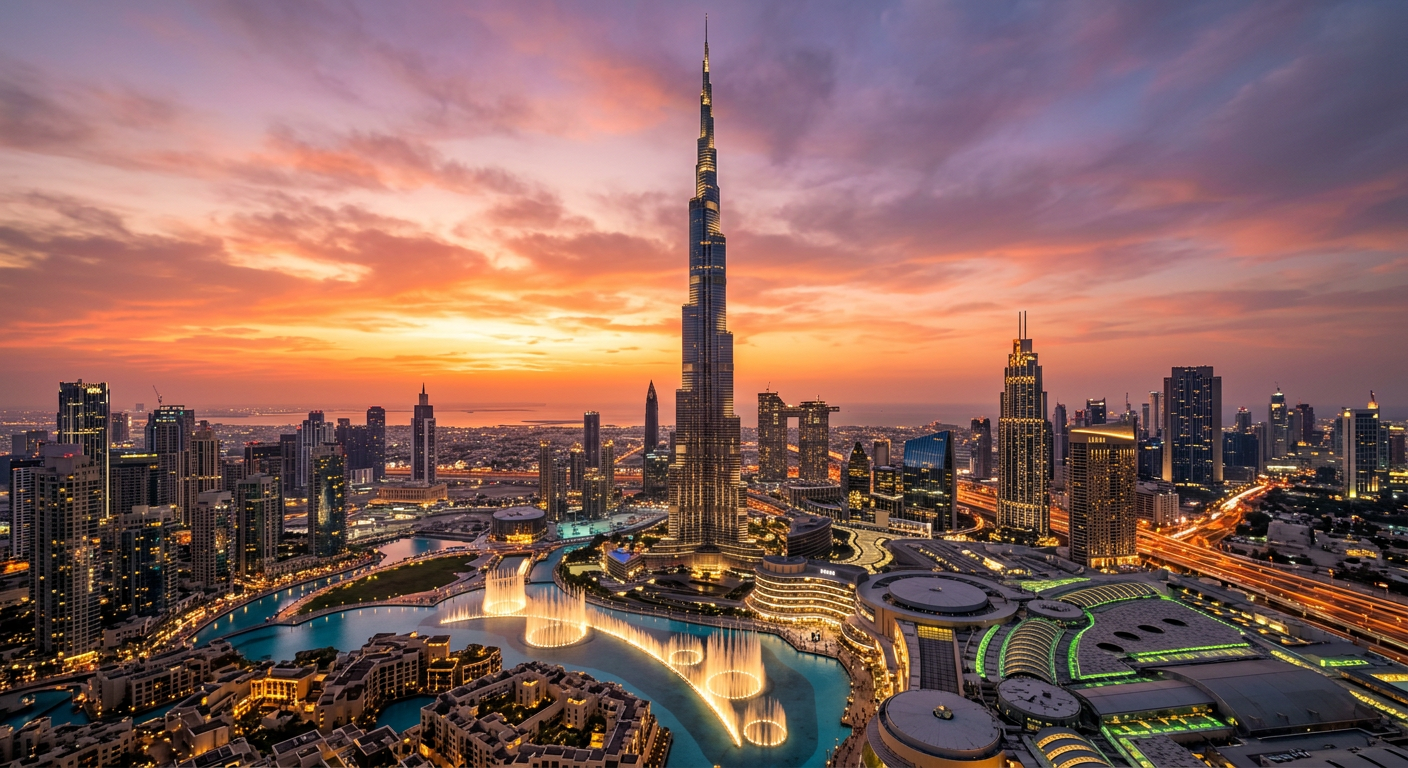
The Burj Khalifa
The Burj Khalifa, the world’s tallest building, presented unparalleled challenges in the design and integration of façade access equipment. Building maintenance units (BMUs) were strategically located at multiple elevations—including Levels 40, 73, and 109, as well as Tiers 19, 20, and 21—to provide complete coverage of the tower’s highly complex and continuously changing façade geometry. At Levels 40, 73, and 109, each installation consisted of three specially designed compact BMUs that parked internally on a rotating carousel system. These carousels were architecturally integrated to support façade elements, fully concealing the equipment when not in use and preserving the building’s iconic visual profile.
When deployed, the BMUs traverse along the exterior of the tower on tracks seamlessly incorporated into the building’s architectural features, allowing safe and efficient access to the façade despite extreme height, wind exposure, and geometric variation. The machines were required to operate reliably under demanding environmental conditions while maintaining strict weight, space, and load constraints unique to a super tall structure. This project underscores the critical importance of early collaboration between architects, structural engineers, and façade access specialists to successfully integrate BMU systems into landmark buildings. The Burj Khalifa exemplifies how advanced façade access engineering, custom equipment design, and architectural sensitivity are essential to achieving safe, code-compliant, and long-term maintenance solutions at the highest level of high rise construction.
Project Involvement:
BMU Design Engineer